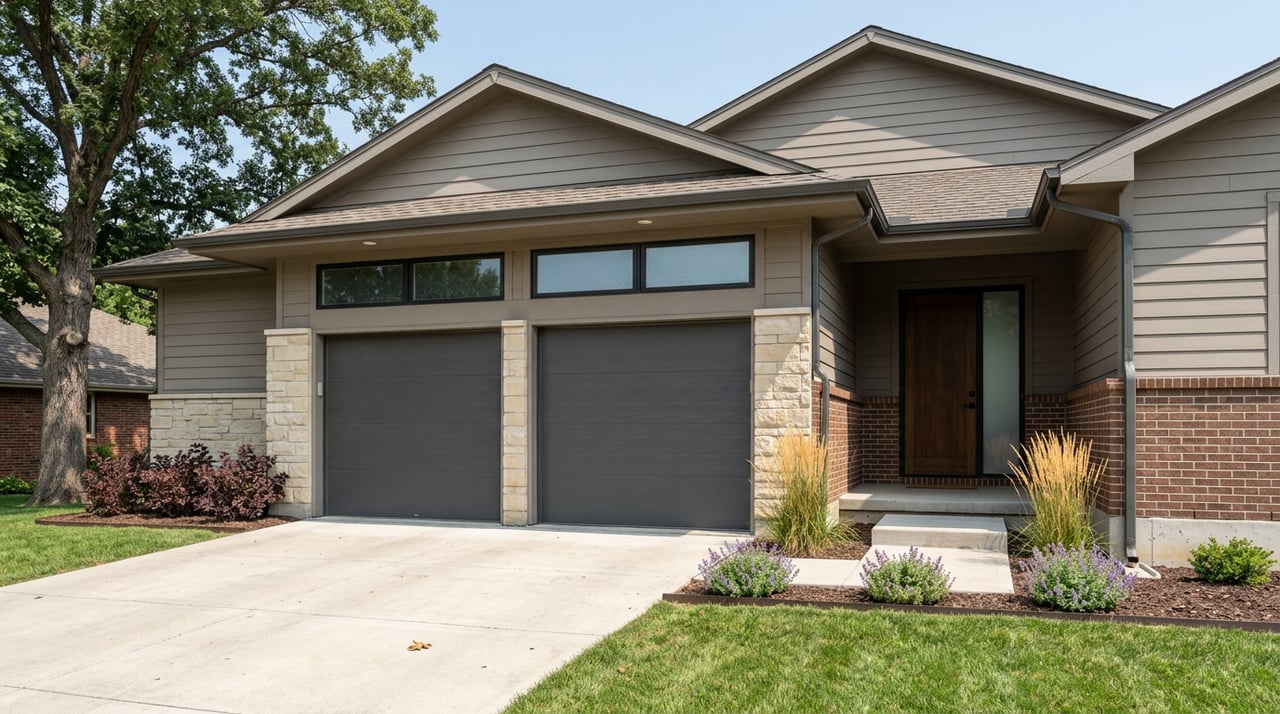
How Broomfield Metro District Taxes Change Home Costs
A buyer touring Broomfield this month might look at a home in Baseline priced at $650,000 and a home in Anthem West priced at $650,000 and treat them as financially interchangeable. Same city. Same rough commute to US 36. Same monthly principal and interest on paper. What that buyer will not see anywhere on the listing sheet is that the two homes sit in different tax areas, and the gap between those tax areas can run well over $1,000 a year on an identical purchase price.
That gap has nothing to do with school ratings, lot size, or how recently the kitchen was updated. It comes from a single line most buyers never think to ask about: which special district taxes the address.
Colorado calculates property tax with a formula that has three separate moving parts, and Broomfield's own assessor's office lays it out plainly: actual value, multiplied by an assessment rate set by the state legislature, multiplied by the local mill levy. The assessor only touches the first number. The state controls the second. Local taxing authorities, city, county, school district, fire district, and any metro district layered on top, control the third.
That third number is where Broomfield gets complicated. Broomfield's Property Tax 101 page explains that for tax year 2025 the state split the assessment rate itself into two rates, which were reflected in the bills residents received in February 2026: 7.05% applied to school mill levies and 6.25% applied to every other mill levy on the bill. So even the percentage of your home's value that gets taxed depends on which authority is collecting.
None of this shows up in an MLS listing. All of it shows up in escrow.
Broomfield's mill levy report, current as of December 31, 2025, breaks the city into dozens of tax areas, each with its own stacked total. Three of the city's best known residential areas illustrate how far apart those totals can land.
| Area | Total mill levy | School district | Metro district add-on |
|---|---|---|---|
| Broomfield Village (established, Boulder Valley RE-2) | 148.449 | Boulder Valley RE-2, 48.044 combined | Broomfield Village Metro #2, 54.8 combined |
| Anthem West (Adams 12) | 135.511 | Adams 12, 70.956 combined | Anthem West Metro District, 19.25 bond |
| Baseline, Metro District #2 area (Adams 12) | 163.892 | Adams 12, 70.956 combined | Baseline Metro District #2, 48.331 |
Run a $650,000 home through the assessor's own formula in each area and the differences turn into real dollars. Using the school assessed value of $45,825 and the non-school assessed value of $40,625 that the split rate produces, a Broomfield Village home lands around $6,280 a year. The same home in Anthem West lands closer to $5,870. That same home in the Baseline Metro District #2 area lands closer to $7,040, nearly $1,200 more than the Anthem West version and roughly $750 more than Broomfield Village, on an identical purchase price.
That ordering surprises most buyers. Baseline is Broomfield's newest large-scale development, still being built out under a series of numbered metro districts formed specifically to finance its streets, parks, and shared infrastructure. It is not the neighborhood most people would guess carries the heaviest annual tax load in the city. It does, and the reason has nothing to do with school quality.
Metro districts exist because Colorado developers do not build roads, water lines, and parks with their own capital and fold the cost into the sale price the way an older, already-built neighborhood absorbed those costs decades ago. Instead, according to Metro District Education, a metro district issues bonds to pay for that infrastructure up front, then repays the debt over time through a mill levy charged to every homeowner inside its boundaries. The Colorado Association of Homebuilders describes this as spreading the cost of new infrastructure across the property owners who benefit from it rather than pricing it entirely into day-one purchase cost, and the arrangement can run for up to 40 years under state law.
Baseline is organized under this model with numbered districts, Baseline Metropolitan District Nos. 1 through 9, working together to finance and maintain the development's shared improvements. Anthem West runs a lighter version of the same structure, with a bond mill roughly 40% the size of Baseline's. Broomfield Village, built out long before either of those communities existed, carries no such bond because its streets and parks were never financed this way in the first place. It does carry its own older metro district charge tied to different obligations, which is why its total still lands in the middle of the pack rather than at the bottom.
None of this is disclosed on a for-sale sign. It shows up on the county's tax certificate and in the recorded service plan for the district, both of which a title company pulls before closing, usually after a buyer has already fallen for the house.
Buyers relocating to the Front Range often treat Boulder Valley School District as the premium option and Adams 12 Five Star Schools as the value option, and home prices across the two districts generally reflect that assumption. The mill levy numbers tell a different story about who is actually paying more in taxes for schools.
Boulder Valley RE-2's combined general, bond, capital, abatement, and transportation fund mills total 48.044. Adams 12's combined general and bond mills total 70.956, nearly 23 mills higher before a single metro district charge gets added on top. Adams 12 voters also passed Ballot Issue 5B this cycle, increasing that district's mill levy further, according to Broomfield's own property tax office.
The district with the lower home price premium is currently levying the higher school tax rate. Buyers chasing "the good district" to save on taxes have the logic backward.
This does not mean Adams 12 schools are underperforming or that Boulder Valley is overpriced. It means the tax mechanism and the price premium are not measuring the same thing, and a buyer who assumes they move together is working from an incomplete picture.
The tax bills Broomfield residents opened in February 2026 climbed 5% to 12% for many households, and the city has been direct about where that increase actually came from. Broomfield's own municipal mill levy, the portion the City and County of Broomfield itself controls, has not moved since 2001 and sits at 28.969 mills. The city says its own share of a typical bill actually decreased by roughly $50 for an average property owner this cycle even as the total bill rose.
Two other forces did the heavy lifting. State Senate Bill SB24-233 exempted $55,000 from residential property values and set a 6.7% assessment rate for tax year 2024, a one-year cushion that expired before tax year 2025. And Adams 12's newly passed mill levy increase landed on top of an already reappraised property base; Broomfield's property valuation page explains that Colorado reassesses every odd year, and the current values reflect sales data collected between July 2022 and June 2024.
For a buyer comparing a Broomfield Village listing against a Baseline listing today, that means the tax gap identified above is not a historical quirk. It is the number currently showing up on real February 2026 bills.
A buyer can verify most of this before it becomes a surprise at closing.
None of these questions require specialized access. They require knowing to ask before the inspection period runs out rather than after the first escrow statement arrives.
The debt service portion is tied to a bond repayment schedule and is capped at 40 years under Colorado law. The timeline varies district by district and should be confirmed directly with the district rather than assumed.
Broomfield's assessor publishes a mill levy by tax area report each January covering the prior year, and a title company will confirm the exact tax area, school district, and any metro or special district as part of a standard title search before closing. Asking for that confirmation earlier, during the showing or offer stage rather than waiting for title work, gives a buyer time to factor the real number into their monthly budget comparison rather than discovering it afterward.
Comparing Broomfield neighborhoods on price per square foot alone leaves out the number that actually determines what a home costs to hold every year. If you are weighing a specific address against another and want the tax area, school district, and any metro district obligations spelled out before you write an offer, 4S Residential Group can pull that comparison together and walk through what it means for your monthly budget. Schedule a complimentary home consultation and bring the addresses you're considering.
This article is general information, not legal, tax or financial advice. Consult a qualified professional about your situation.

Our attention goes a long way to help our clients and their family see a successful future.