Thinking about moving to Thornton and wondering what your daily drive or train ride will feel like? Commute time shapes your routine, budget, and even which neighborhoods make the most sense. You want clear answers on rail options, highway access, and realistic door-to-door timing. In this guide, you’ll learn how Thornton connects to Denver and the region, which routes work best for common job hubs, and how to align your home search with your commute goals. Let’s dive in.
How Thornton connects to the region
Thornton sits north-northeast of Denver in Adams County, giving you multiple ways to reach downtown, the Denver Tech Center, Denver International Airport, Boulder, and northern suburbs. Most residents drive, but regional rail and express-bus options make transit practical for many downtown-bound commuters.
Your commute experience depends on where you live within Thornton, how quickly you can reach I-25 or E-470, and whether you can walk, bike, or drive a short distance to a rail station or Park-n-Ride. If you’re relocating for work, it helps to pick your primary destination first, then select neighborhoods that match that path.
Rail and bus: RTD N Line and Park-n-Ride
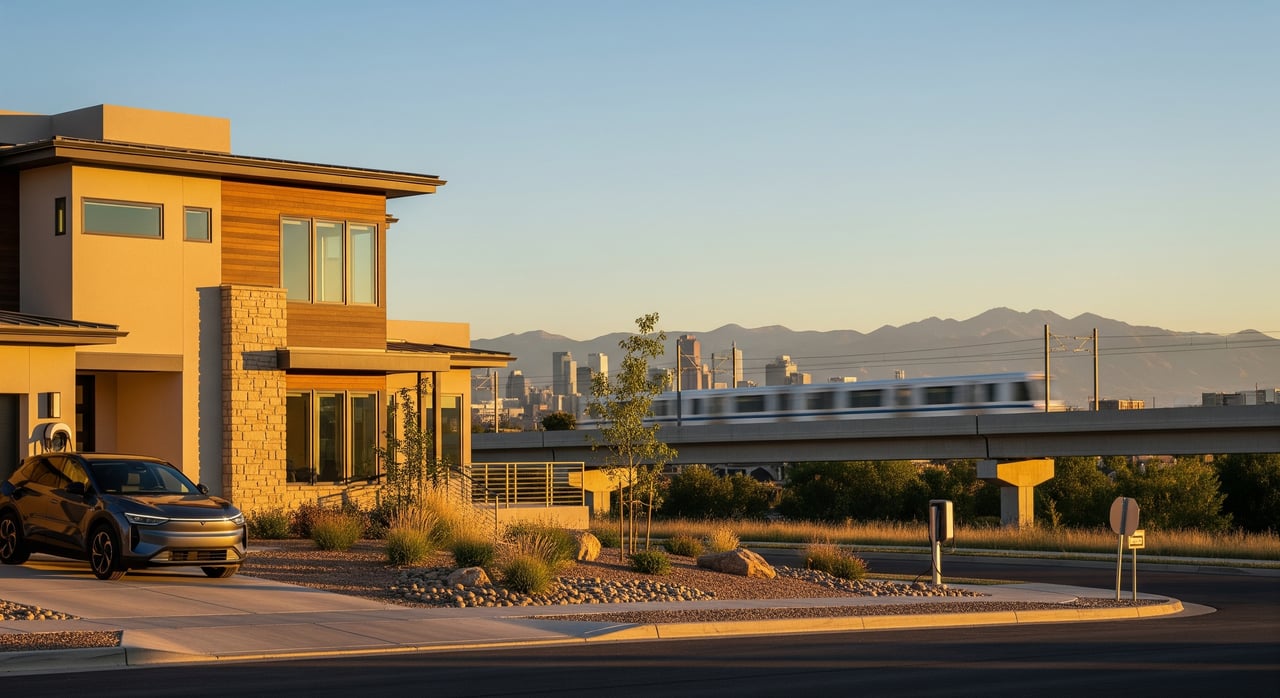
The RTD commuter rail on the North Metro corridor, known as the N Line, connects the northern suburbs to Denver Union Station. From Union Station, you can transfer to light rail lines, local and regional buses, and the A Line to Denver International Airport. For many downtown commuters, this is the most direct transit option.
When it shines:
- You work in or near downtown and want predictable travel times during peak hours.
- You can live close to an N Line station or a convenient Park-n-Ride so the first mile is quick.
- You prefer to avoid I-25 congestion on the busiest days.
Limitations to note:
- Jobs in the Denver Tech Center, Boulder, or dispersed suburban campuses usually require transfers or longer connections, which adds time.
- Off-peak frequency may be lower than light rail or high-frequency urban bus routes. Always confirm current timetables before deciding.
Park-n-Ride and first/last mile tips
If you plan to drive to a Park-n-Ride, check current parking capacity and rules. Short bike rides, local buses, drop-offs, or rideshare can also make rail work well even if you are not within walking distance. The key is making that first and last mile simple and predictable.
Driving: Key corridors and tradeoffs
Driving is still the most common commute mode in the north metro. Your experience will vary by time of day and your access point.
Core corridors:
- I-25 is the main north–south route to downtown Denver and south metro jobs. It can be very efficient off-peak and slower during weekday rush hours.
- I-76 connects to I-70 and the eastern and northeastern suburbs, including Commerce City and Brighton.
- I-70 runs east–west through the metro. It links with I-76 and I-25 and is a key route for East Denver and mountain access.
- E-470 is a tolled eastern beltway that helps you bypass inner-metro congestion and reach Denver International Airport more quickly. It offers fully electronic tolling.
What to expect:
- I-25 is often the fastest single-seat drive downtown when you can travel outside peak periods.
- E-470 saves time for DIA and cross-metro trips but adds toll costs. Many drivers use it to avoid central congestion.
- For the Denver Tech Center, driving I-25 south is usually the fastest path. Transit typically requires transfers and longer overall time.
- Heading to Boulder, most Thornton commuters drive via I-25 and connect to US-36. There is no direct rail from Thornton to Boulder.
Best routes by job hub
Downtown Denver
- Best options: N Line commuter rail to Union Station, express buses, or driving I-25.
- Tradeoffs: Rail or express buses give more predictable peak-hour timing. Driving can be competitive off-peak or if you are very close to I-25. If downtown is your daily destination, consider living near a rail station or a Park-n-Ride.
Denver Tech Center (DTC)
- Best options: Driving I-25 south is typically the fastest door-to-door. Some commuters try a Park-n-Ride plus transfer to light rail, but most routes require at least one connection.
- Tradeoffs: Transit is less direct. If the DTC is your main hub, prioritize west or southwest Thornton for quicker I-25 access.
Denver International Airport (DIA) and airport-area jobs
- Best options: Driving via E-470 and Peña Boulevard is often the most direct, single-seat drive. A transit option exists by taking commuter rail to Union Station and transferring to the A Line to DIA.
- Tradeoffs: E-470 reduces travel time but adds tolls. Rail plus transfer avoids driving but adds at least one connection and depends on schedules.
Boulder and US-36 corridor
- Best options: Drive via I-25 to US-36, or continue on US-36 to Boulder. Park-and-ride options on the US-36 corridor can help if you prefer to avoid parking in Boulder.
- Tradeoffs: There is no direct rail from Thornton to Boulder, and multi-segment transit often takes longer than driving. If Boulder is your hub, prioritize strong highway routing toward US-36.
Northern suburbs, Commerce City, Brighton, and local Adams County jobs
- Best options: Local arterial roads, I-76, and short drives tend to be effective for dispersed job sites. Some routes are served by regional and local buses.
- Tradeoffs: Because many employment centers are spread out, driving often offers the most flexibility.
Match your home search to your commute
Align your search area with your top priority: predictability, shortest drive, transit-first living, or toll avoidance. A focused plan makes your daily routine smoother.
- Downtown Denver focus: Target homes with quick access to N Line stations or Park-n-Rides. If you prefer to drive, look for neighborhoods with short, direct routes to I-25.
- DTC and south-metro jobs: Favor west or southwest Thornton to shorten the hop onto I-25 south.
- Frequent DIA trips or airport employment: Eastern Thornton access to E-470 often pays off in time saved. Weigh the ongoing toll cost against shorter travel.
- Boulder commuters: Choose locations that make reaching I-25 and the US-36 corridor simple. If you plan to use park-and-ride facilities along US-36, test the route during your expected commute window.
- Transit-first lifestyle: Limit your search to areas within an easy walk, bike, or short drive to an RTD rail station or a frequent express-bus stop. Confirm service frequency fits your work hours.
Cost, reliability, and lifestyle tradeoffs
Every commute choice comes with a balance of time, money, and predictability. A little planning keeps surprises to a minimum.
- Time predictability: Transit can be more consistent during peak periods. Driving can be faster off-peak but more variable if there is a crash or construction.
- Toll budgeting: If you plan to use E-470 often, add a realistic monthly toll line to your budget and compare it to the time saved.
- Parking and station demand: Homes near stations and Park-n-Rides are convenient and often in higher demand. Check weekday parking rules, potential fees, and bike storage options if you plan to ride.
- Noise and microclimate: Living close to major arterials can deliver faster access, but there may be more road noise. Walk the block at different times of day to gauge comfort.
- Off-peak flexibility: If you commute outside rush hour or have hybrid work, a location with flexible access to both rail and highways can cover changing schedules.
A simple process to test-drive your commute
Before you choose a neighborhood, do a quick two-step test:
-
Dry run your route. Try your expected commute during a typical weekday. If you plan to use rail, run the full door-to-door trip, including transfers and parking or bike time.
-
Compare two scenarios. For example, test I-25 at your start time and, on another day, try N Line to Union Station. Or test E-470 to DIA with and without tolls. Note the total time, stress level, and cost.
This exercise clarifies what you value most: shortest clock time, most predictable timing, or least friction.
Bottom line for Thornton commuters
- Downtown: N Line or express bus often wins for peak-hour predictability; off-peak driving can be competitive.
- DTC: Quick I-25 access usually matters most.
- DIA: E-470 offers speed with tolls; rail plus A Line is a clean all-transit option with a transfer.
- Boulder: Plan to drive via I-25/US-36 or use US-36 corridor park-and-ride options; there is no direct rail from Thornton to Boulder.
Ready to align your home search with your commute priorities? Our team can help you map neighborhoods to your job hub, evaluate time-versus-cost tradeoffs, and preview listings that make your daily routine easier. Schedule a complimentary home consultation with 4S Residential Group and start your move with clarity.
FAQs
Is public transit from Thornton realistic for daily downtown commuting?
- Yes. If you live near an RTD N Line station or Park-n-Ride, transit to Union Station is a practical daily option, especially during peak hours.
What are the fastest options from Thornton to the Denver Tech Center?
- Driving I-25 south is typically fastest. Transit often requires one or more transfers and longer door-to-door time.
How do I reach Denver International Airport quickly from Thornton?
- Driving via E-470 and Peña Boulevard is often the quickest single-seat route. You can also take commuter rail to Union Station and transfer to the A Line.
Is there direct rail from Thornton to Boulder?
- No. Most commuters drive via I-25 to US-36 or use US-36 corridor park-and-ride options. Multi-segment transit takes longer.
Should I budget for tolls when living in Thornton?
- If you expect to use E-470 regularly for DIA or to bypass congestion, include toll costs in your monthly commute budget.