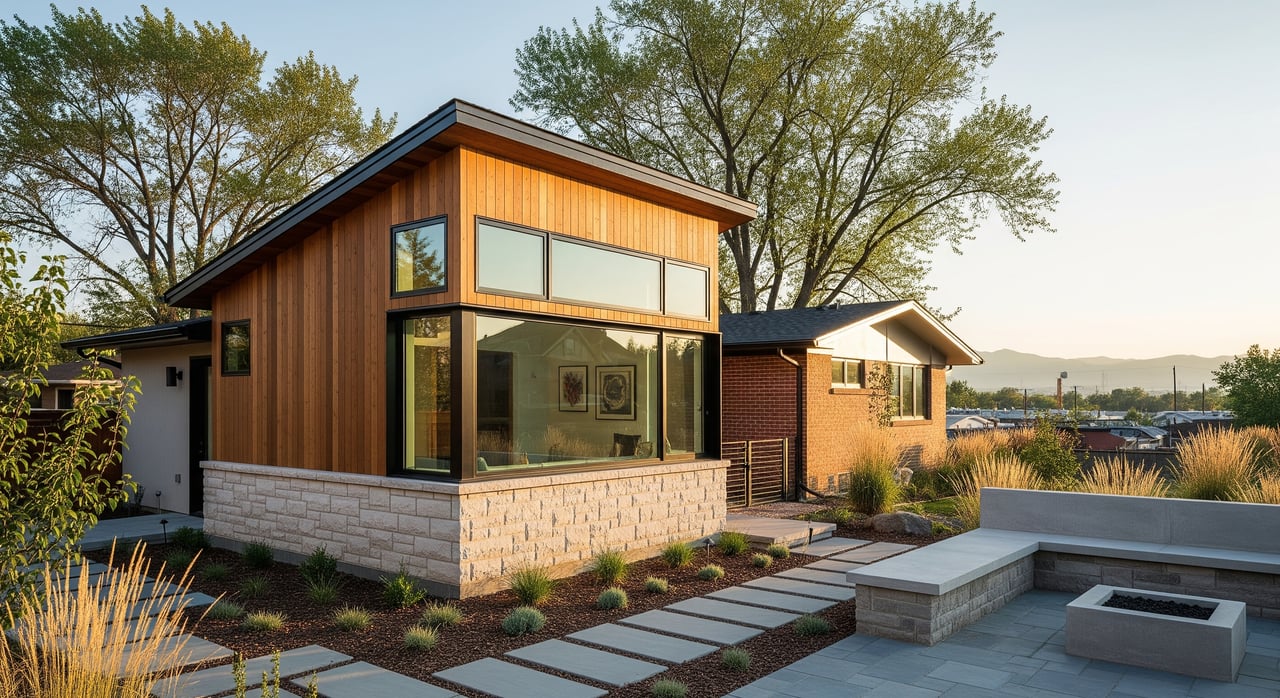
How Colorado’s ADU Law Impacts Homeowners in Thornton
Thinking about adding a backyard cottage or converting your garage in Thornton? You are not alone. Colorado’s new ADU law opened the door for more homeowners to build a second unit, and it changes some long‑standing local rules. In this guide, you will learn what the law says, how it applies in Thornton, and the practical steps to move forward with confidence. Let’s dive in.
Colorado’s HB24‑1152 requires covered cities to allow one accessory dwelling unit as an accessory use to any single‑unit detached home in areas where that home type is allowed. Approvals must be administrative, which means staff use objective standards and no public hearing is required. The compliance deadline for local governments was June 30, 2025. You can review the bill on the Colorado General Assembly’s HB24‑1152 page and the statute summary on FindLaw’s section 29‑35‑403.
Yes. The Colorado Department of Local Affairs (DOLA) lists Thornton as a subject jurisdiction, so these requirements apply citywide wherever single‑unit detached homes are allowed. DOLA also provides implementation resources and FAQs for residents and local governments. See DOLA’s ADU guidance and jurisdiction list for context.
Thornton’s published guidance from October 17, 2023 shows the city already allowed internal, attached, or detached ADUs, with one ADU per lot. The city listed a 500 square foot minimum and a 1,000 square foot maximum or 50 percent of the primary home, whichever is less. Thornton required the owner to occupy either the main home or the ADU, required on‑site parking to be shown on a site plan, and required a deed restriction before permit issuance. Home occupations were not allowed in an ADU. You can read the city’s prior summary in the Thornton ADU knowledge base article.
State law generally prohibits subject jurisdictions from requiring owner‑occupancy as a condition of ADU approval. Thornton’s older requirement for owner‑occupancy will need to be removed or narrowly adjusted to fit the statute. Check the city’s current code for updated language since June 30, 2025. See the statute summary at FindLaw’s section 29‑35‑403.
HB24‑1152 limits new off‑street parking mandates for ADUs. A city may only require one new space in specific cases, such as when no off‑street parking exists and on‑street parking is prohibited, and only if parking was already required for the primary home as of January 1, 2024. Thornton’s prior rules required on‑site parking to be identified, which will need to align with the state’s narrower exceptions. Review your property’s conditions and the city’s latest standards.
The law guarantees a baseline right to build ADUs between 500 and 750 square feet. Local governments can allow more or less, but cannot set size rules that effectively block the state’s minimum right. Thornton’s earlier 500 square foot minimum aligns with the floor, and its 1,000 square foot or 50 percent maximum may be retained if it does not undercut the baseline. DOLA’s ADU guidance explains how cities should interpret percentage rules.
The statute applies across zone districts and planned developments where single‑unit detached homes are allowed. HOA covenants that outright prohibit ADUs in subject jurisdictions are restricted, subject to a reasonable‑restriction standard. For association rules, see the HOA statute at Justia’s C.R.S. 38‑33.3‑106.5.
ADUs must be processed through an administrative review that uses objective standards. Public hearings are not part of standard approvals except for narrow historic property contexts. Read definitions and process details at Justia’s section 29‑35‑402.
If you want to build an ADU, plan for an administrative planning review plus standard building permits, inspections, and life‑safety checks. Thornton adopted the 2024 International Codes with local amendments, so expect modern energy, structural, and egress standards to apply. See the city’s ordinance adopting the 2024 codes on Thornton’s website.
If you are buying, an ADU can offer flexibility for extended households or long‑term rental income. Confirm that the lot allows single‑unit detached homes, check HOA rules, and evaluate feasibility before you rely on future income in your budget. Ask your agent to help you vet size limits, parking conditions, and likely construction scope.
If you are selling, an ADU or ADU‑ready site can widen buyer interest. Clear documentation of permits, compliance with current code, and thoughtful presentation will help buyers feel confident. Strategic prep and strong marketing can position the property’s flexibility as a value add.
DOLA can certify cities as ADU Supportive Jurisdictions, which opens the door to state grants that help reduce fees and encourage construction. Homeowners in certified jurisdictions may also access financing options through partners like CHFA. Check DOLA’s ADU grant program page and ask the city if Thornton has pursued certification.
State law allows local governments to regulate short‑term rental use of ADUs. Thornton’s current materials do not outline an ADU‑specific STR policy, so you will want to verify local licensing and caps before planning for STR income. For background on local STR authority, see DOLA’s overview on regulating ADU use.
Ready to evaluate an ADU opportunity on your Thornton property or a home you want to buy? If you want a clear, local plan from feasibility through sale or purchase, connect with Michael Brassem for a thoughtful, no‑pressure conversation.
Our attention goes a long way to help our clients and their family see a successful future.